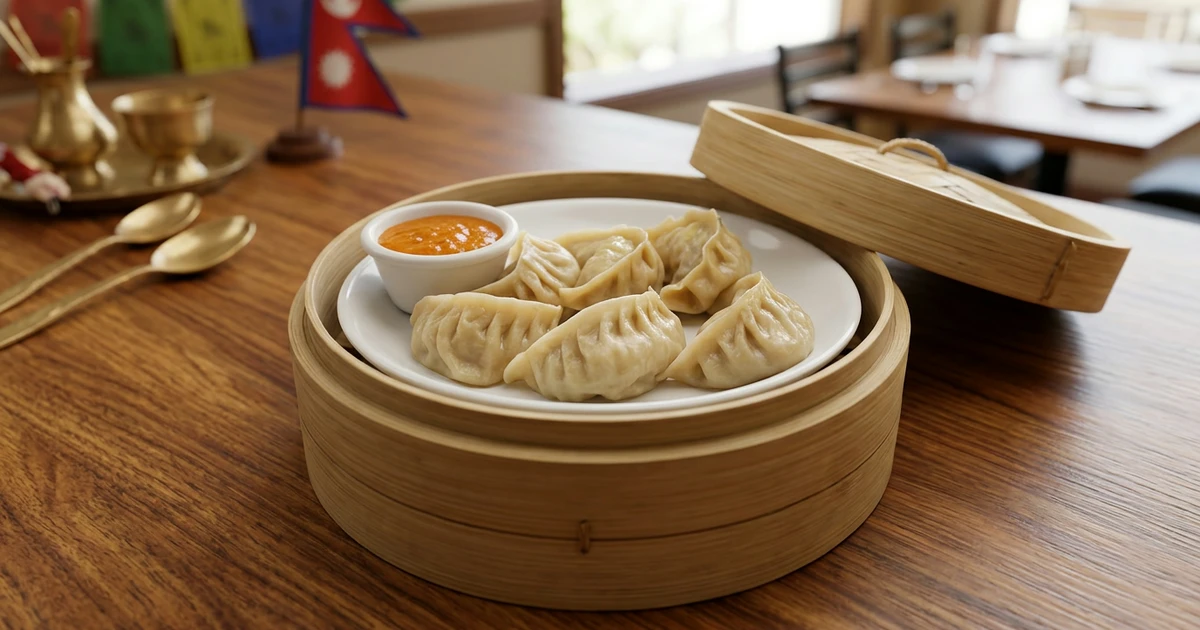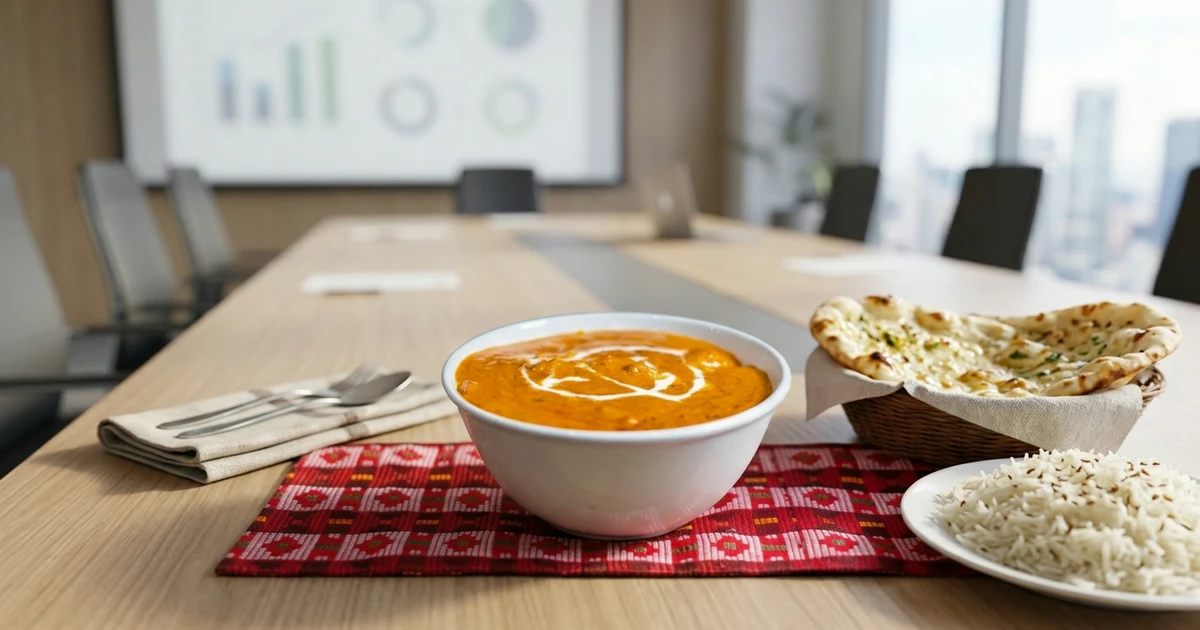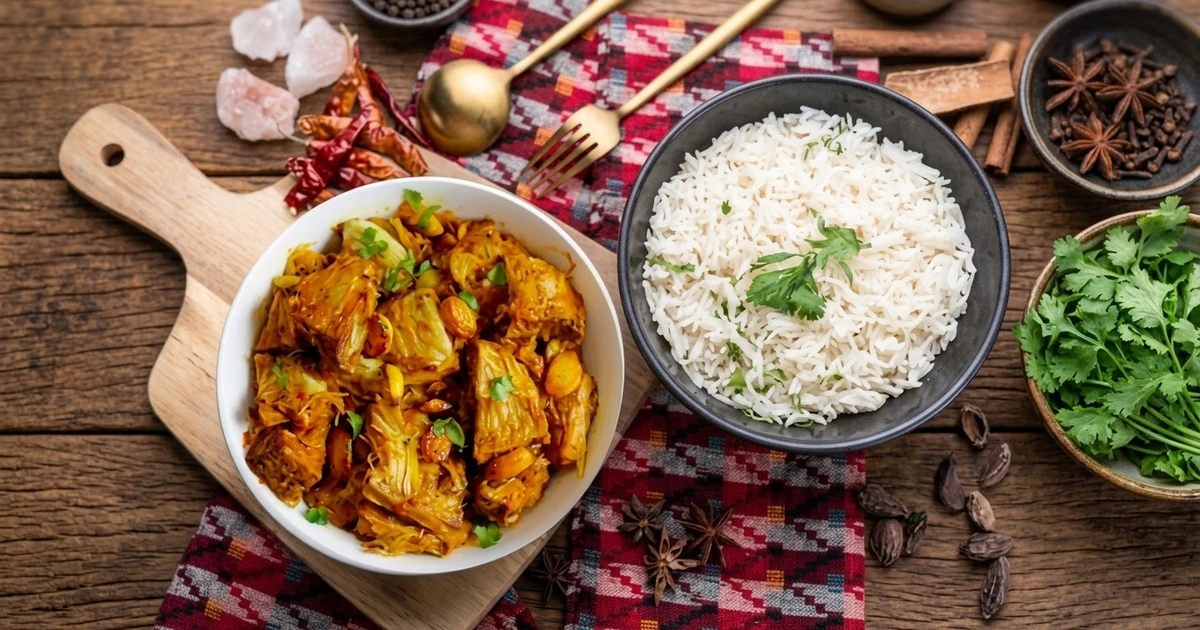
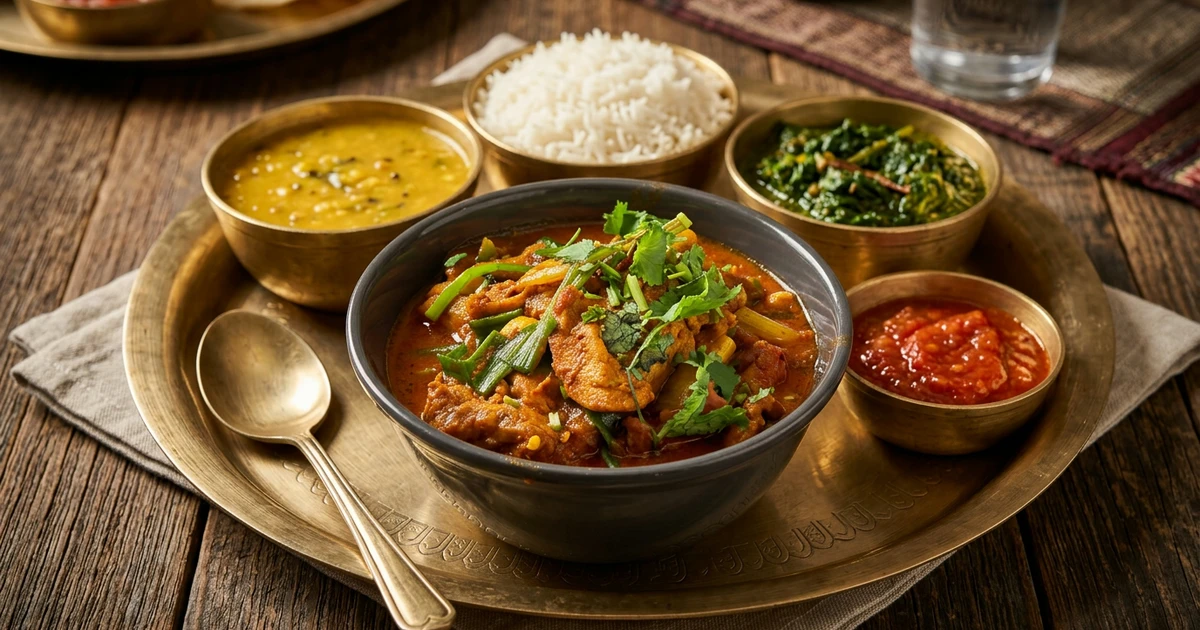
Ask most Americans what Nepali food is, and they will say momo, or maybe Himalayan BBQ. Ask any Nepali what they actually eat most days, and the answer is dal bhat — rice, lentil soup, vegetable curry, and greens, built fresh at nearly every meal. It is less a dish than a daily structure, and it is the closest thing Nepal has to a national cuisine. At Kathmandu Los Altos, dal bhat is not a footnote; it is available both as individual components and as the fully assembled Thakali Thali.
What Dal Bhat Actually Means
“Dal” is lentil soup. “Bhat” is steamed rice. Together, the phrase describes a meal format: a mound of rice, a bowl of dal poured over or served alongside it, a vegetable curry (tarkari), a leafy greens preparation (saag), and a pickle or achar for acidity and heat. In Nepal, dal bhat is eaten at least once a day by most households, and in many trekking regions of the Himalayas, it is eaten twice — once before a day’s trek and once after — because it delivers exactly the sustained carbohydrate-and-protein balance that long walking demands. This is where the phrase “Dal Bhat Power, 24 Hour” comes from: a saying trekking guides use to describe the meal’s staying power, since a properly portioned dal bhat can fuel a full day of walking in thin mountain air.
Kathmandu Los Altos puts that exact phrase on its menu. The Dal Bhat Power 24 Hour ($12.60) is a self-contained version of the format, listed in the Veg-Soups section but functioning as a complete light meal — a nod to the trekking-lodge tradition where this dish originated.
Dal Bhat vs. Thakali Thali: What’s the Difference?
Dal bhat is the concept. The Thakali Thali is Kathmandu Los Altos’s fullest execution of it. Thakali refers to the Thakali people of the Mustang district in Nepal, historically traders along the Kali Gandaki trade route who developed one of the country’s most refined regional cooking styles — precise spicing, balanced components, and a reputation across Nepal for running the best roadside eateries (bhattis) in the country. A proper Thakali Thali plate includes rice, a dal, a vegetable curry, a green saag, a pickle, and a protein component if ordered non-vegetarian.
Kathmandu Los Altos offers six Thakali Thali variations: Veg Thakali Thali ($21), Chicken Thakali Thali ($21), Fish Thakali Thali ($21), Pork Thakali Thali ($23.10), Goat Thakali Thali ($23.10), and Lamb Thakali Thali ($23.10). Each is a complete plate, not a curry-and-rice combo assembled from leftover à la carte items — it is built and portioned as its own dish.
Building Your Own Dal Bhat, À La Carte
For diners who want to understand each component individually, or who want to customize proportions, Kathmandu Los Altos’s menu allows that too. On the dal side: Dal Tadka ($12.60) is a tempered yellow lentil preparation, brighter and thinner than its cousin. Black Dal (Dal Makhani) ($14.70) is the richer, slow-simmered whole urad lentil dish finished with butter — heavier, creamier, and the closer match to what North Indian restaurants call dal makhani, adapted here into the Nepali dal bhat structure. Lentil Soup ($12.60) is the lightest of the three, closer to a clear broth than a thick dal.
For the greens component, Saag (Mustard or Spinach Greens) ($14.70) rounds out a home-style dal bhat plate. Add Plain Rice ($3.00) or Brown Rice ($4.20), a side of Papad Papadam (2 Pieces) ($2.50) for crunch, and the Aalu Potato Salad Pickle ($5.00) for the achar component, and you have assembled a full dal bhat plate to your own specifications — heavier on dal, lighter on rice, or however your appetite runs that day.
Why Dal Bhat Matters More Than It Gets Credit For
Momo gets the Instagram attention. Sekuwa gets the “authentic BBQ” search traffic. But dal bhat is what actually sustains Nepal — it is the meal a farmer eats before a full day in the fields, the meal a trekking porter eats before carrying 30 kilograms up a mountain trail, and the meal most Nepali households eat without thinking of it as a “dish” at all, the way Americans don’t think of a sandwich as a culinary event. Understanding dal bhat is understanding what Nepali food is when nobody is trying to impress anyone — just fuel a body needs to get through a demanding day.
Ordering Dal Bhat at Kathmandu Los Altos
First-timers should start with the Chicken Thakali Thali ($21) or Veg Thakali Thali ($21) to get the complete, properly balanced version. Regulars who already know their preferred dal-to-rice ratio can build their own plate from the à la carte dal, saag, and rice options. Either way, this is a meal meant to be eaten slowly and completely — not rushed the way momo or a chilli appetizer might be.
Kathmandu Los Altos is located at 376 1st St, Los Altos, CA 94022, open Monday, Wednesday, and Thursday 11 AM–3 PM and 5–9 PM, and Friday through Sunday 11 AM–3 PM and 5–10 PM (closed Tuesday). Order direct below to skip third-party markup and get your Thali fresh.
Frequently Asked Questions
Q: What is dal bhat? A: Dal bhat is Nepal’s everyday meal structure: steamed rice (“bhat”) served with lentil soup (“dal”), a vegetable curry, sautéed greens (saag), and a pickle (achar). It is eaten daily across Nepal and is considered the country’s true national dish, more so than momo or Sekuwa.
Q: What is the difference between dal bhat and a Thakali Thali? A: Dal bhat is the general concept — rice, dal, curry, greens, pickle. Thakali Thali is Kathmandu Los Altos’s specific, fully assembled version of that concept, named for the Thakali people of Nepal’s Mustang region, who are known for a particularly refined version of this meal style.
Q: What does “Dal Bhat Power, 24 Hour” mean? A: It is a Nepali trekking-culture phrase describing how well a properly portioned dal bhat sustains energy through a long day of physical activity, historically used by Himalayan trekking guides and porters. Kathmandu Los Altos names a menu item, Dal Bhat Power 24 Hour ($12.60), directly after the phrase.
Q: Is dal bhat vegetarian? A: The base dal bhat structure (rice, dal, vegetable curry, saag, pickle) is naturally vegetarian, and the Veg Thakali Thali ($21) reflects that. Non-vegetarian versions add a protein component — chicken, fish, pork, goat, or lamb — for $21–$23.10.
Q: Can I order just the dal without the full Thali? A: Yes. Dal Tadka ($12.60), Black Dal/Dal Makhani ($14.70), and Lentil Soup ($12.60) are all available individually, so you can build a lighter or custom dal bhat plate without ordering the full Thakali Thali.
Q: Is Thakali Thali the same as an Indian thali? A: Related but distinct. Both are complete plate meals, but Thakali Thali follows the specific regional style of Nepal’s Mustang district, with its own spicing and component balance rooted in Himalayan trade-route cooking rather than mainland Indian regional traditions.